Gender Disparities in Film Representation
An iMDb Top 250 Rated Films DataBase Set Analysis
March 2025
Type of Design: Data Visualization, Informational Design
Role: All roles (Individual Course Project)
Main Software(s): Adobe Illustrator, Google Spread Sheet
Overview
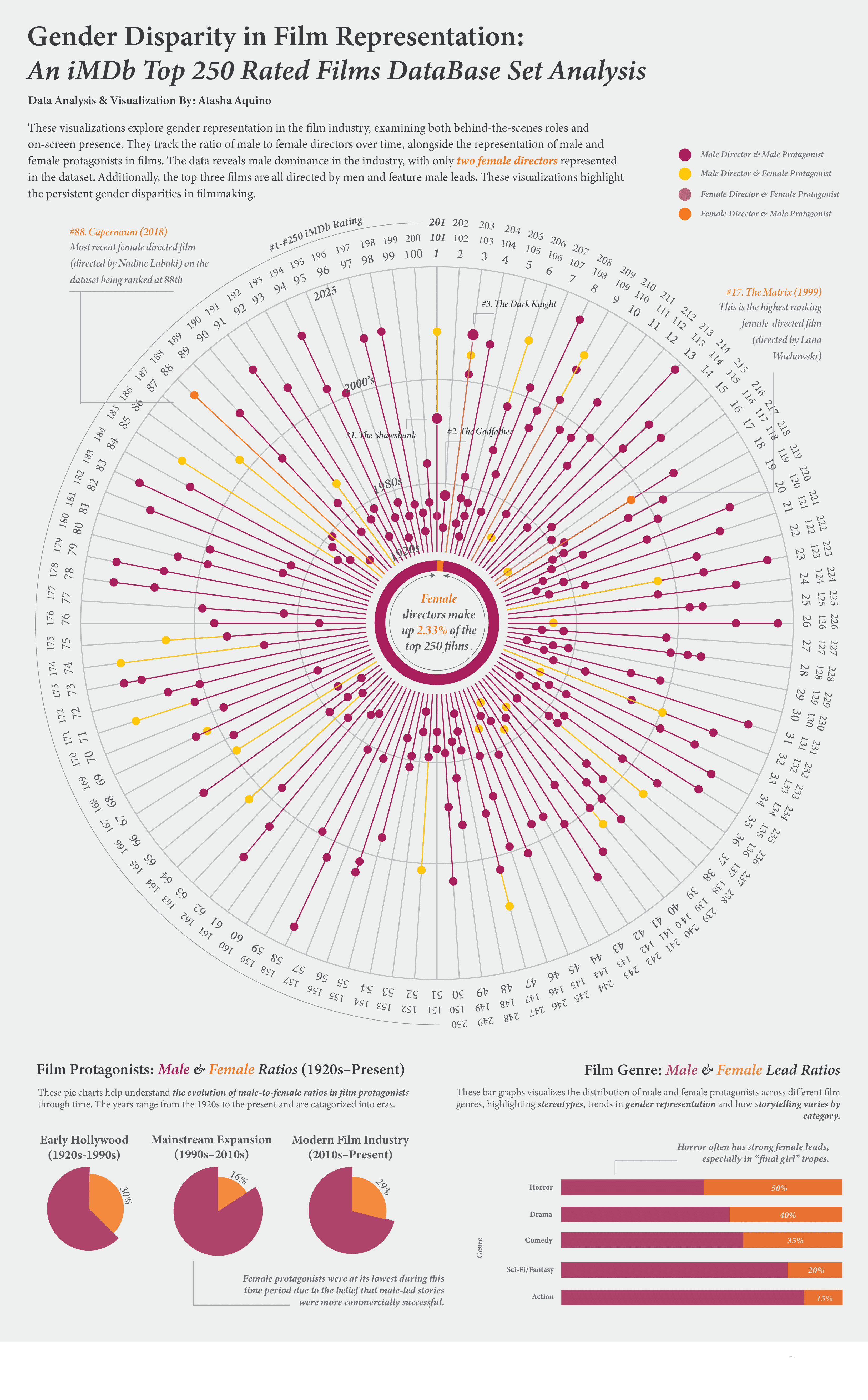
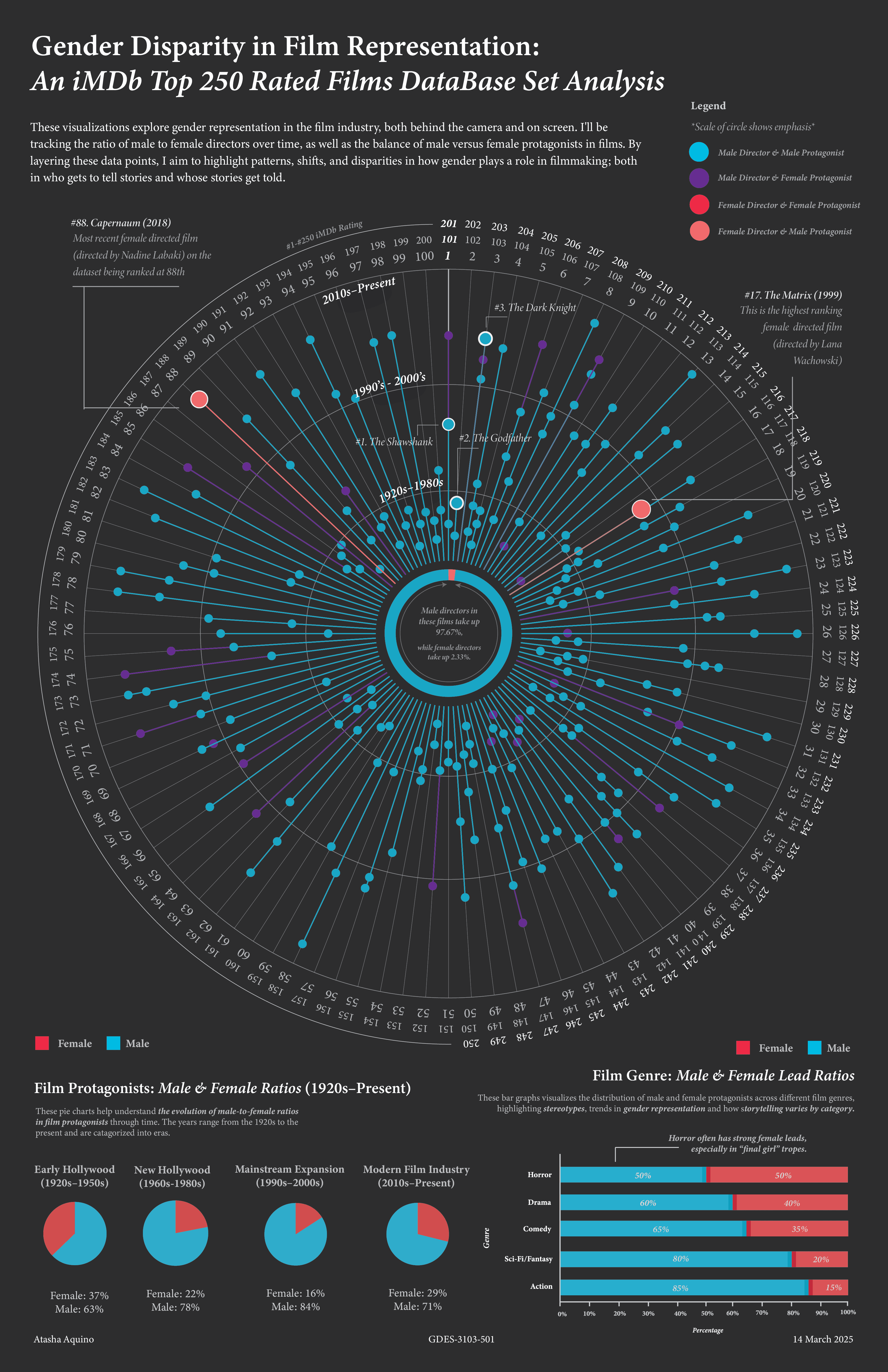
My take on this project explores gender representation in film directors/protagonists across different eras and genres through intersecting & informative data visualizations. Designed to present complex film data in an engaging format, my goal was to make the disparities in gender roles more accessible and easy to interpret.
These visualizations help viewers quickly distinguish trends in female and male in film representation over time, as well as across different genres. By showcasing and layering attributes such as director genratios, protagonist gender distribution, historical shifts, and genre-based patterns, the project allows for an intuitive comparison of how gender dynamics have evolved in cinema. Whether analyzing early Hollywood, indie film movements, or modern blockbusters, these visualizations provide an efficient way to explore and understand gender representation in film at a glance.
Process: Sketches + Analysis
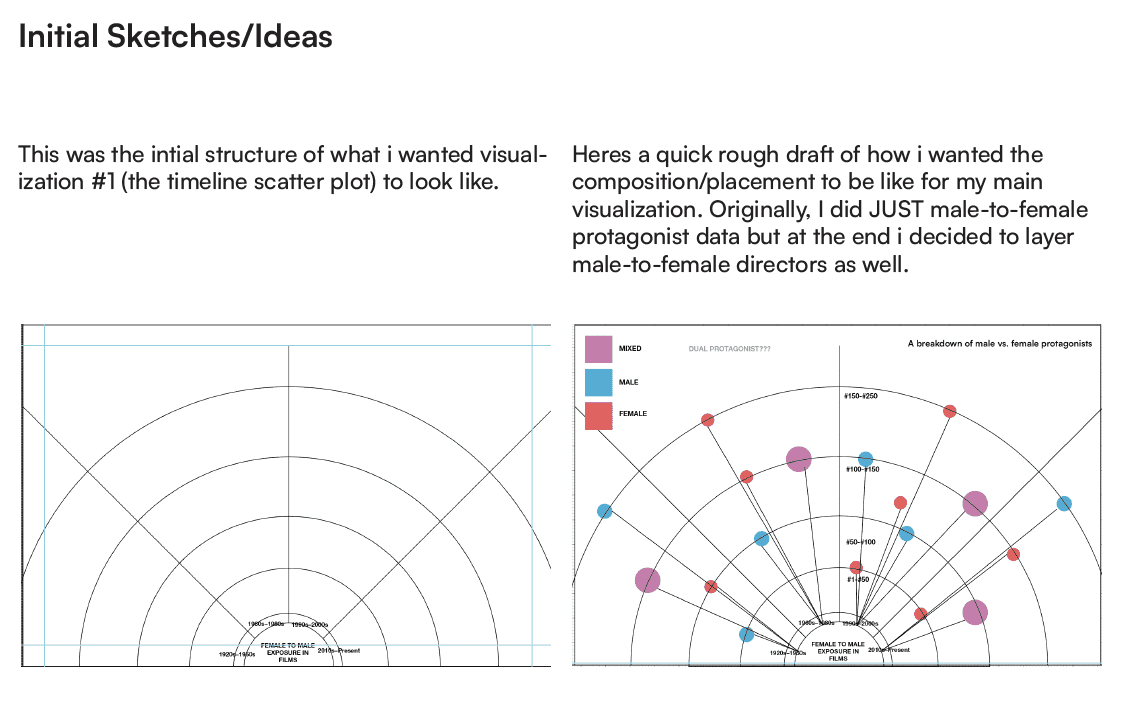
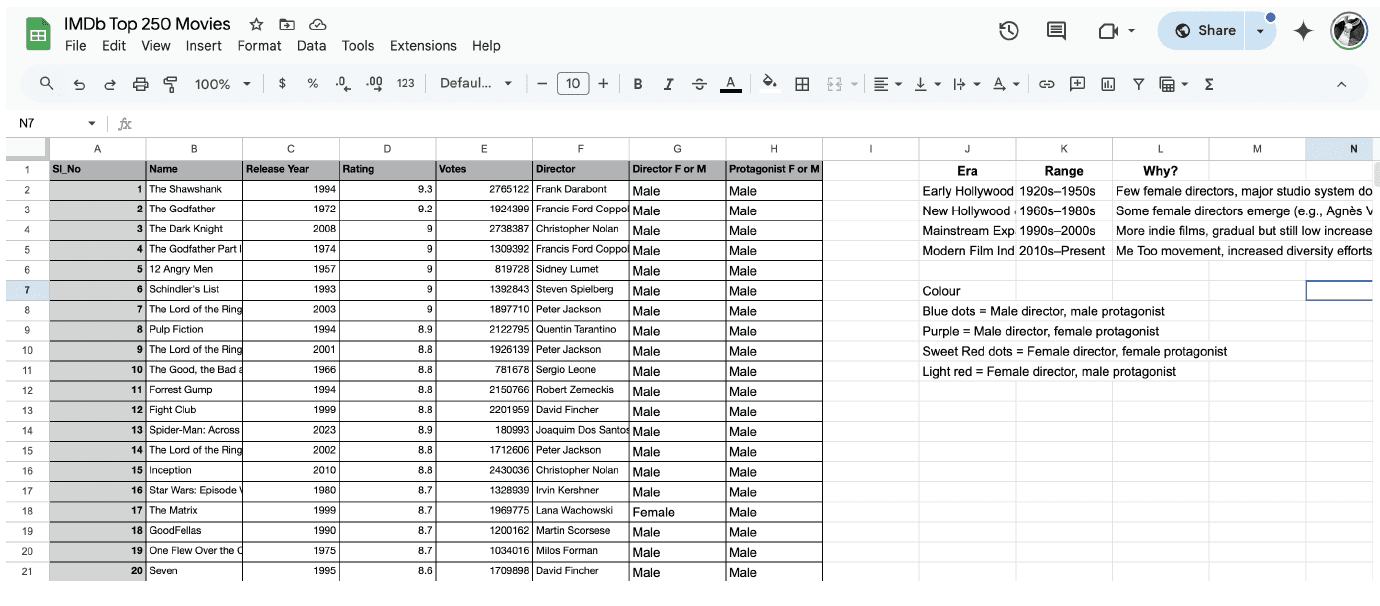
The process began with data collection and cleaning, focusing on compiling datasets that highlighted gender representation across film genres and time periods. Initial sketches and wireframes were created to map potential visualization formats and test how well they conveyed the disparities. Research included studying existing visualizations of gender in media, analyzing how colors, proportions, and chart types were used to communicate sensitive cultural issues without bias. References from academic readings on visual communication also informed design choices, particularly around clarity and accessibility. Iterative drafts were created, moving from basic charts to more layered visualizations, ensuring that each stage balanced readability with storytelling impact. The final selection of bar graphs and pie charts came from comparing multiple prototypes and determining which formats best emphasized the persistent imbalance in representation while still remaining accessible to a wide audience.
Layering Process + Execution
The layering process was a key part of ensuring that my visualizations were both informative and visually intuitive. I mainly focused on organizing multiple data attributes in a way that wouldn’t overwhelm the viewer while still allowing for meaningful comparisons between each visualization created. These are some of my steps that i took in order to get to my final print...
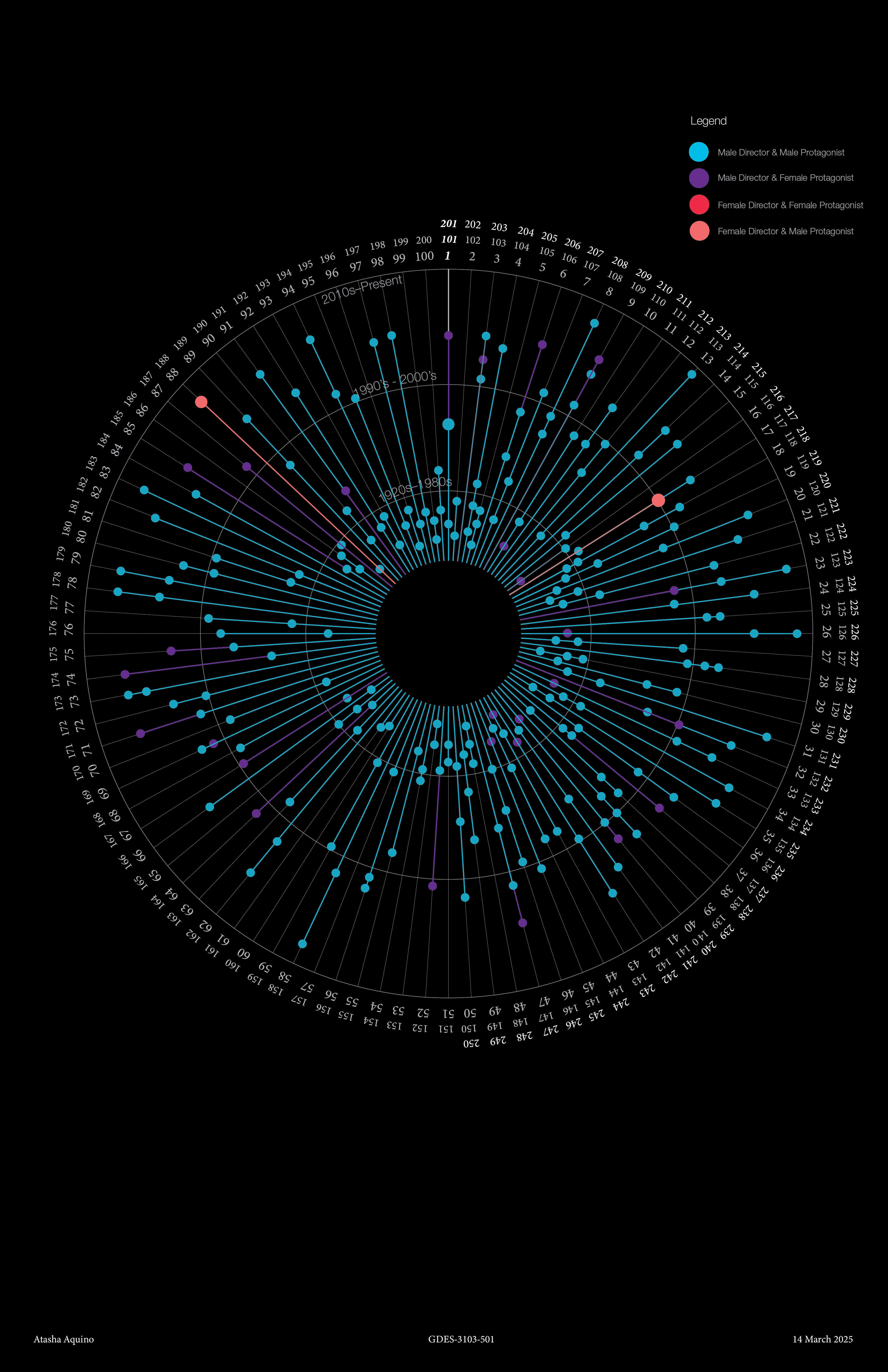
Color Coding: Each protagonist’s gender and director’s gender were differentiated using distinct color schemes across all visualizations. For example, in the scatter plot, blue represented male protagonists under male directors, while red signified female-led films by female directors. The bar graph followed a similar approach, ensuring immediate recognition of trends.
Graph Types & Structure: I utilized different chart formats to highlight various aspects of gender distri-bution. The scatter plot was structured with layered positioning, emphasizing ranking and director-pro-tagonist relationships, while stacked bar graphs were used to show how male and female leads varied across different film genres.
Time Segmentation: For the pie charts (Film Protagonists: Male & Female Ratios), I segmented the data into four distinct eras to provide a historical progression of gender representation, layering data across time periods for the viewers easy comparison.
Hierarchy & Scaling: Data points were structured with size variations where necessary (ex. film rankings of female directors in the scatter plot), ensuring the most relevant comparisons were instantly noticeable by the viewer.
Typography & Labeling: Clear labeling and axis markers were layered onto the graphs to improve readability, ensuring that key information (such as numerical ratios and trends) remained accessible without overwhelming the viewer.
Final Thoughts
This assignment provided a deeper understanding of gender disparities in film and the power of data visualization in storytelling. The process of selecting visual formats, refining data encoding, and ensuring clarity in representation was crucial to effectively communicate key insights.
This project also brought to light the importance of both design and narrative storying within data. A key lesson for me was that a well-structured visualization can guide understanding, but it is also up to the viewer to engage with it critically. My biggest takeaway from this reflection is that effective data visualization is a balance of clarity, accuracy, and accessibility. Having the opportunity to create and discuss underrepresented topics such as women’s roles in film was very important to me. Learning these principles gave me clarity to ensure the message I put out is clear and impactful.