The Food Packaging Flood
Mapping Our Plastic Consumption Crisis
April 2025
Type of Design: Data Visualization, Informational Design
Role: All roles (Individual Course Project)
Main Software(s): Adobe Illustrator, Google Spread Sheet
Overview
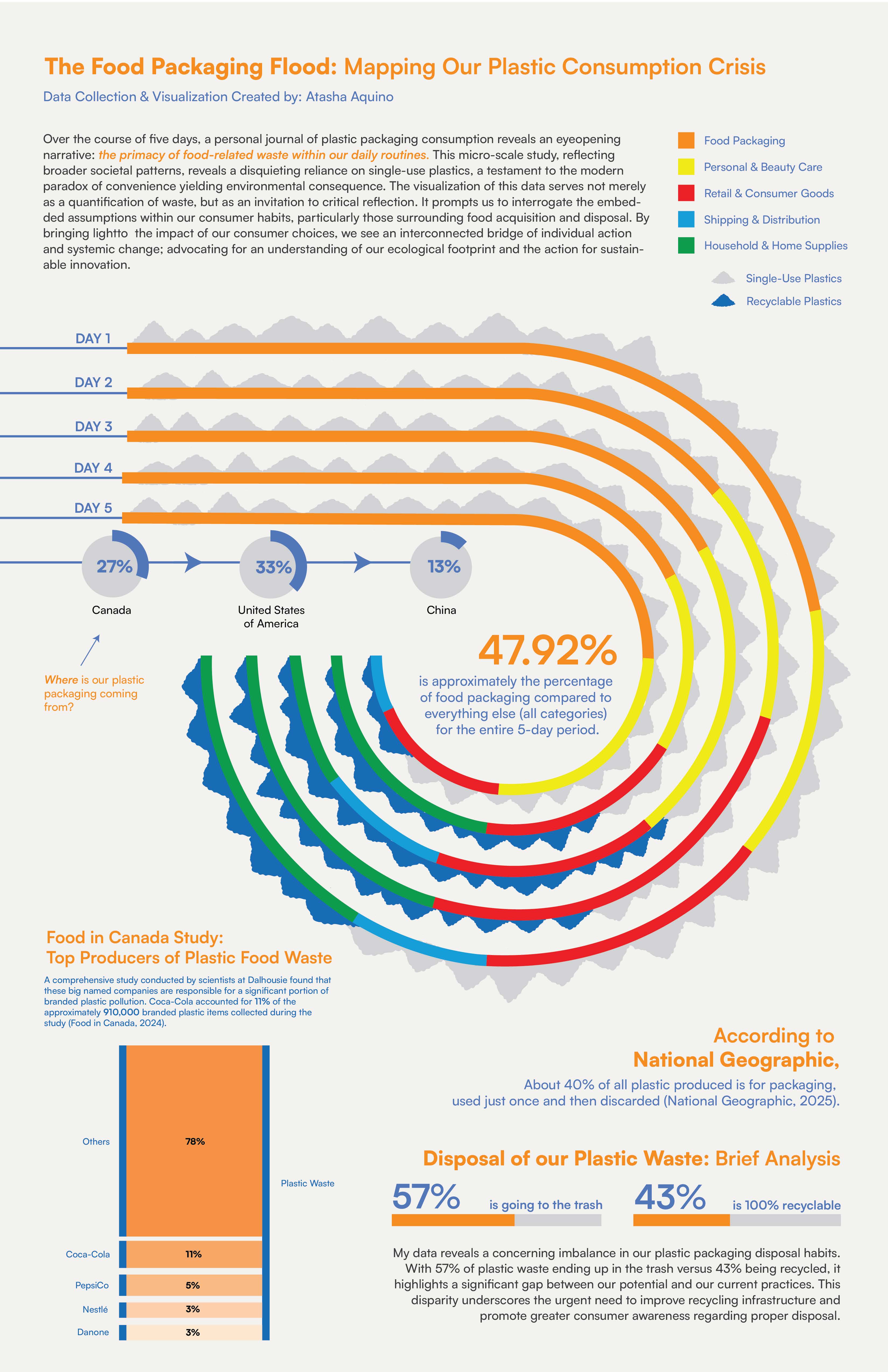
My take on this project explores the presence and persistence of plastic food packaging waste in our daily lives, with a focus on both personal consumption patterns and corporate contributors. Through intersecting and informative data visualizations, my goal was to make the scale and repetition of plastic waste—particu-larly from branded food packaging—more accessible and easy to interpret.
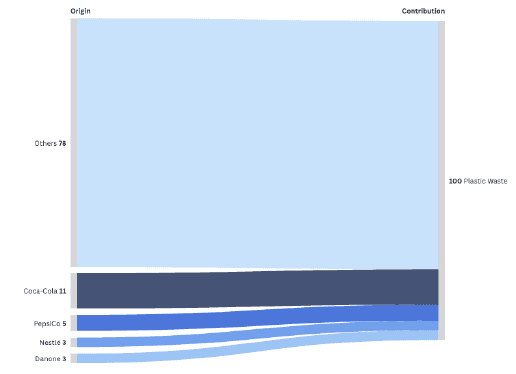
These visualizations help viewers quickly distinguish the frequency of waste in individual routines, as well as identify major corporations like Coca-Cola, PepsiCo, Nestlé, and Danone as top contributors to branded plastic pollution. By showcasing and layering attributes such as daily waste accumulation, packaging types, and brand-specific statistics, the project allows for an intuitive understanding of how plastic consumption plays out at both a micro (personal) and macro (corporate) level. Whether reflecting on grocery shopping habits or analyzing global waste data, the visualizations offer a clear, engaging lens into the issue of plastic overconsumption.
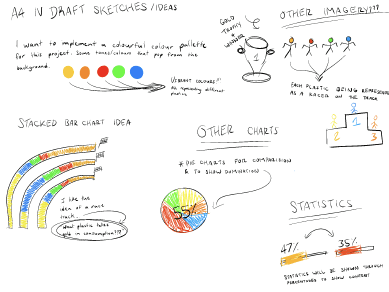
Process: Sketches + Analysis
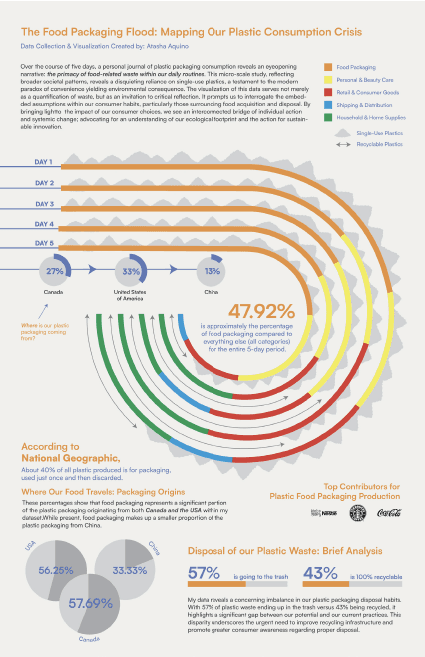
Second Draft
I wanted to replace the bottom pie charts with a fan chart.
Second Draft
I replaced the pie charts with the fan graph. the fan graph displays statistics on the topic. I felt as though this was more relevant for the matter of my visualizations.
Layering Process + Execution
The layering process was essential in creating visualizations that felt digestible while still carrying depth and impact. My goal was to clearly communicate the persistence of plastic packaging in everyday life and spotlight the major contributors to this global issue. I made intentional decisions to organize attributes like source, type, frequency, and brand contribution in a way that invites interpretation without overwhelming the viewer. These are some of my key steps:
Color Coding: To help viewers quickly distinguish between types of packaging waste, I applied a consistent color system throughout all visuals. Blue was used for general plastic food packaging, red for take-out, yellow for grocery packaging, and green for recyclable materials. This layering helped tie each graph together visually while emphasizing which types of waste were most prevalent.
Graph Types & Structure: I selected different visualization formats to convey unique insights and com-parasions; A stacked bar chart, Fan Chart, Percentage diagram, etc.
Hierarchy & Scaling: Proportional size and layout were carefully considered especially in the case stu-dent fan chart. showing which company holds the most amount of contribution. Clear labeling and axis markers were layered onto the graphs to improve readability, ensuring that key information (such as numerical ratios and trends) remained accessible without overwhelming the viewer.
Typography & Labeling: Clear labeling and axis markers were layered onto the graphs to improve readability, ensuring that key information (such as numerical ratios and trends) remained accessible without overwhelming the viewer.
Final Thoughts
My biggest takeaway from this experience was the realization that visual storytelling can connect micro-level behaviors to much bigger systems. It can be activist in its approach, especially when grounded in feminist principles of equity, power analysis, and reflexivity. I found this process very eye-opening, because it made me to reflect on my own role as both a designer and a consumer. The challenge now is how to carry this mindset forward into future visual work: one that doesn’t just simply look good, but asks better questions and invites others to think of other alternatives.