Where Do our Everyday Objects Come From?
Exploring our Objects Material + Origin Country.
Jan 2025
Type of Design: Data Visualization, Informational Design
Role: All roles (Individual Course Project)
Main Software(s): Adobe Illustrator, Google Spread Sheet
Overview
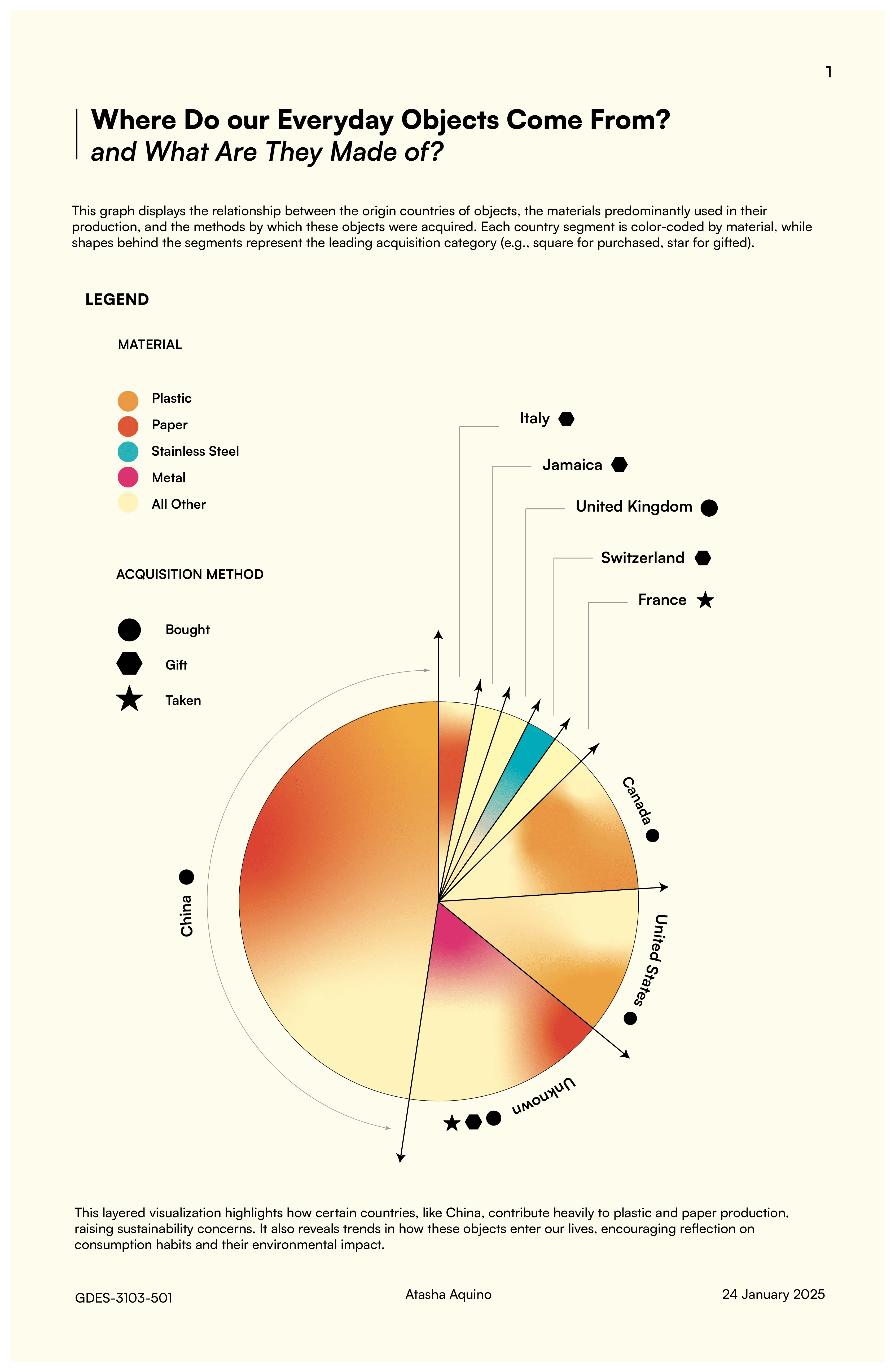
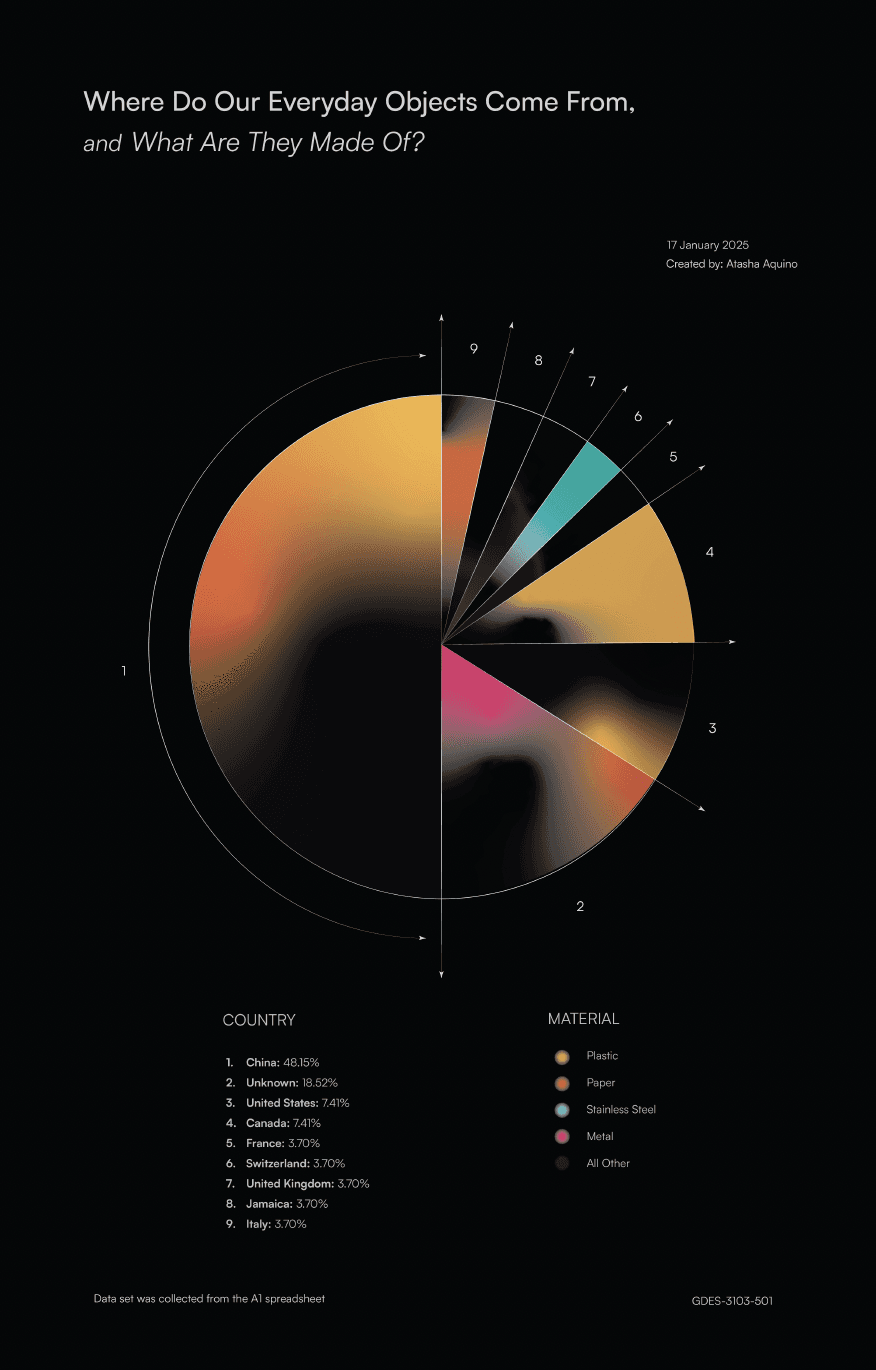
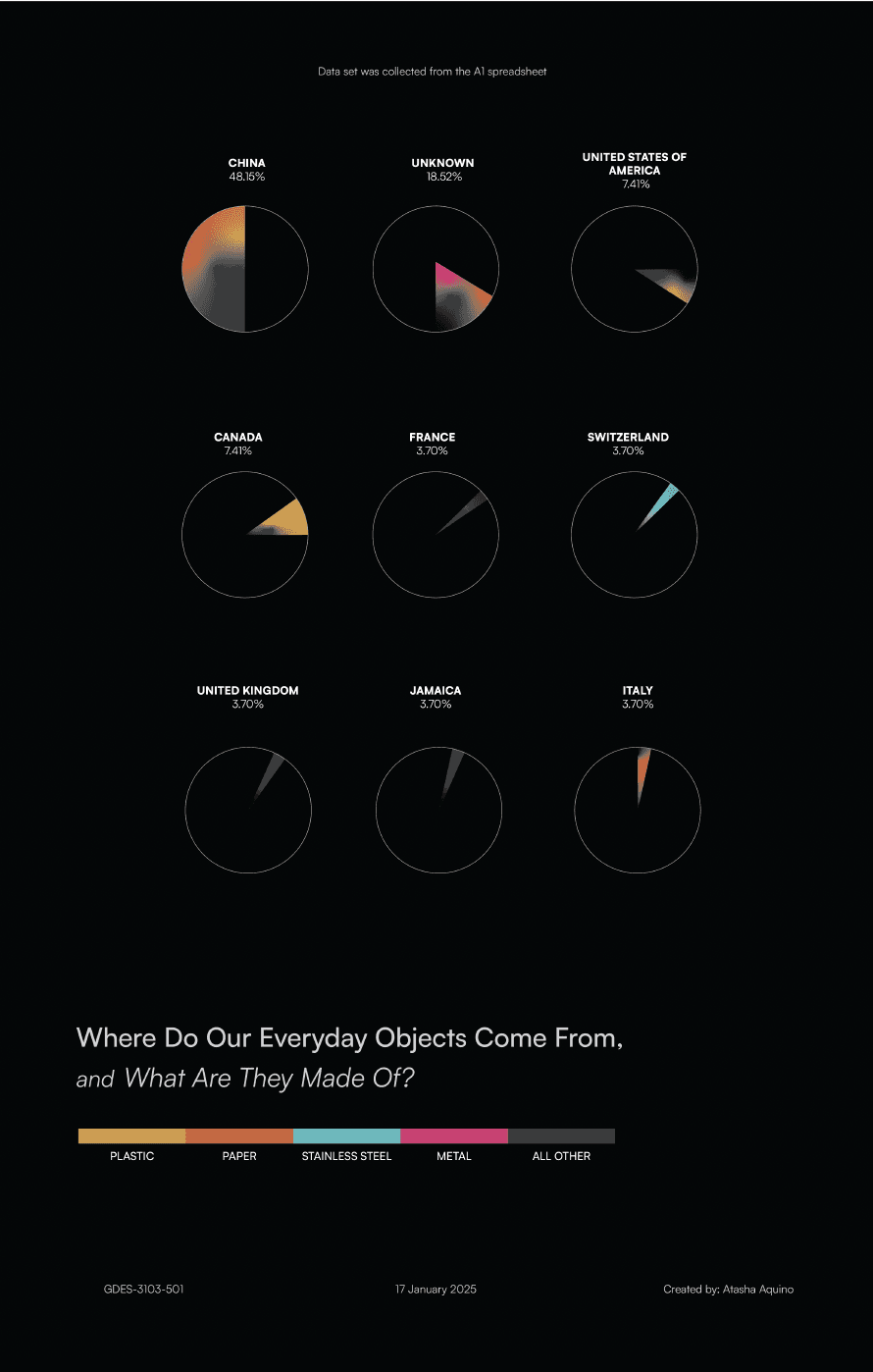
The concept of this project is to explore the relationship between the origin countries of class objects, the materials they predominantly are made from, along with an added layer of how these objects were acquired (3 trends in total). The aim is to highlight trends in global production and sustainability, while also analyzing the role of the classes’ consumer behavior.
Process Sketches
Process: Sketches & Analysis
Draft One
Process: Sketches & Analysis
Draft Two
Process: Sketches & Analysis
Final Outcome
Process: Sketches & Analysis
Layering Process + Execution
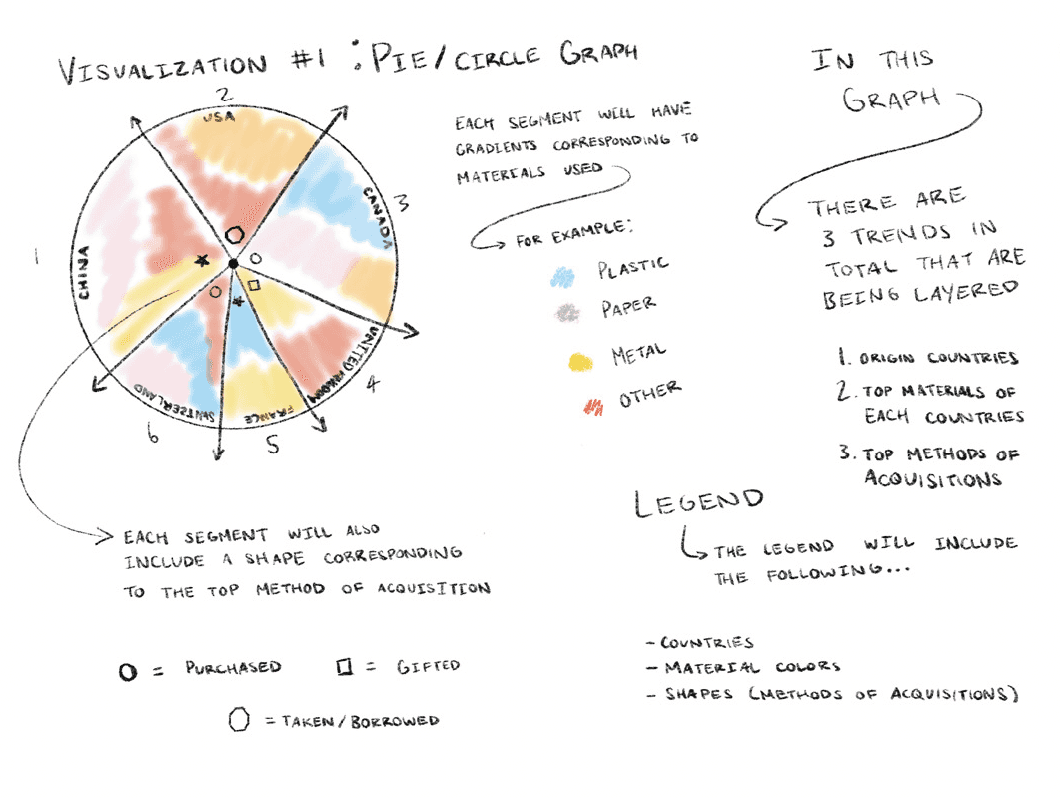
In Visualization #1 (pie chart), multiple attributes were layered to present a comprehen-sive view of the data. The chart segments represent the percentage contribution of each origin country, scaled proportionally to reflect dominance. Each segment’s color gradient corresponds to the dominant material used for objects from that country, visually con-necting country of origin with material prevalence. Behind each segment, an additional shape (square for purchased, star for gifted) further encodes the method of acquisition, adding another layer of insight to the visualization.
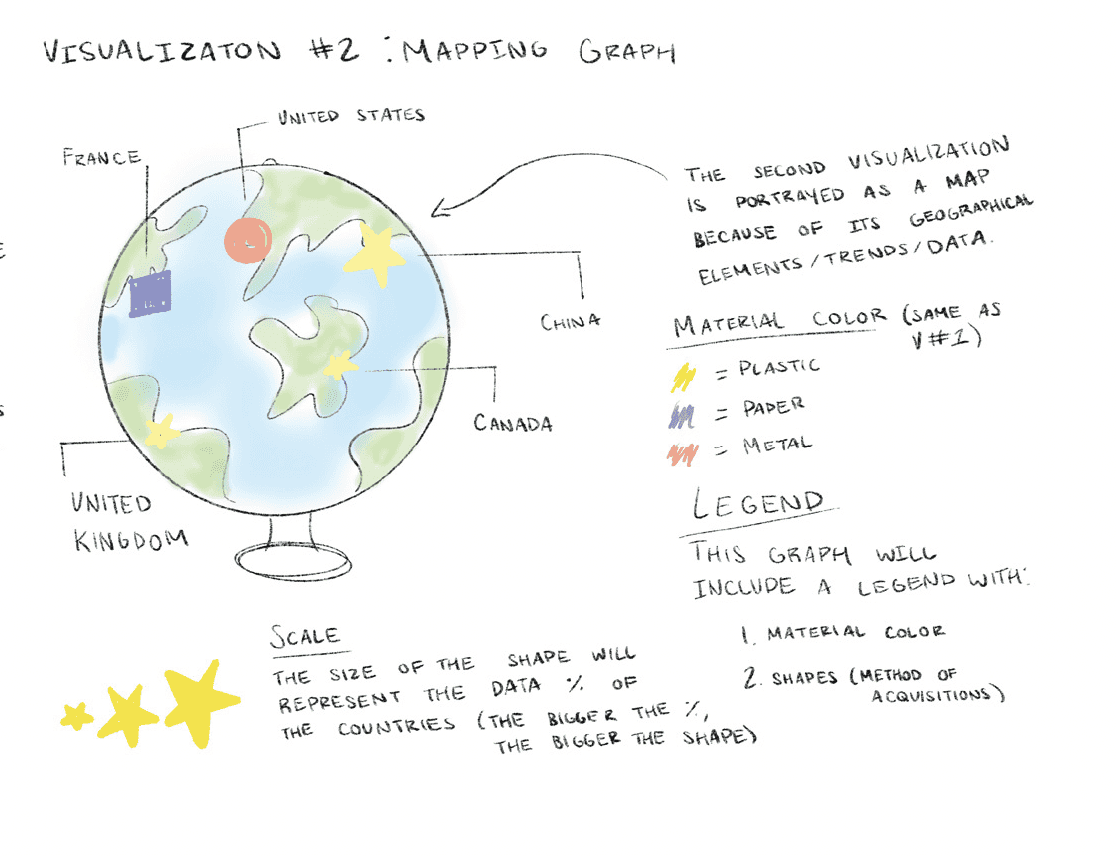
In Visualization #2 (map graph), attributes were layered geographically and visually
to create a multifaceted narrative. Each country is labeled on the map along with their shape. The shapes overlaid on the map denote the method of acquisition, while their siz-es reflect the relative percentage contribution of objects from each country. The shapes are also colour associated with the leading material represented using distinct colors.
Process: Sketches & Analysis
Final Thoughts
After asessment, I can confidently say that these visualizations successfully integrate proportional data, material trends, and acquisition insights, achieving the project’s goals. By incorporating the theme of sustainability into the narrative of the graphs, the charts bring reflection about global production practices and the materials used. Also, the use of shapes to represent acquisition methods enhances the discussion by tying consumer behavior to the conversation. Overall, the visualizations effectively communicate visually appealing & layered insights while maintaining storytelling and meaningful intention.
Process: Sketches & Analysis