Canada's Lobster Lifeline
A Visual Analysis of Canada’s Seafood Export Economy
November 2025
Overview
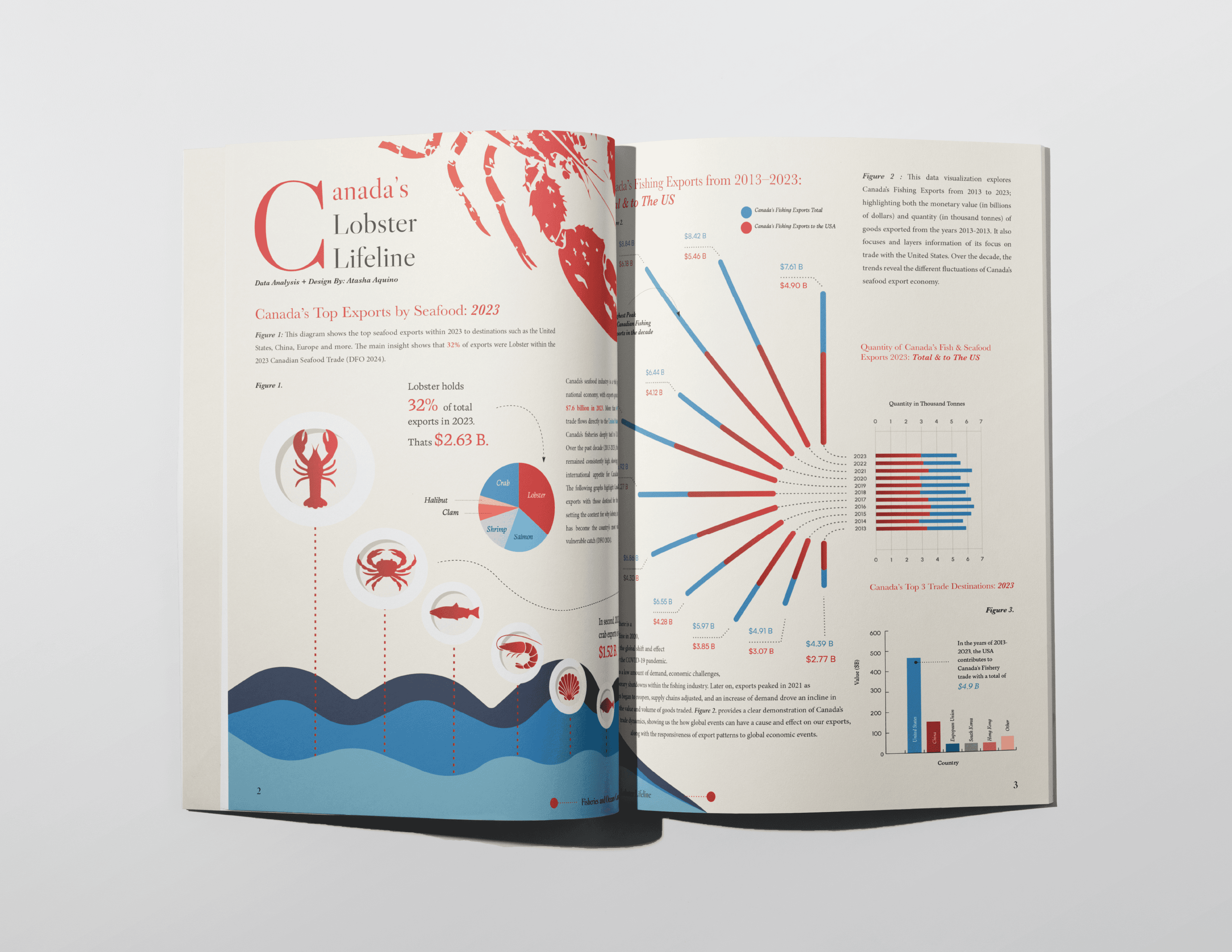
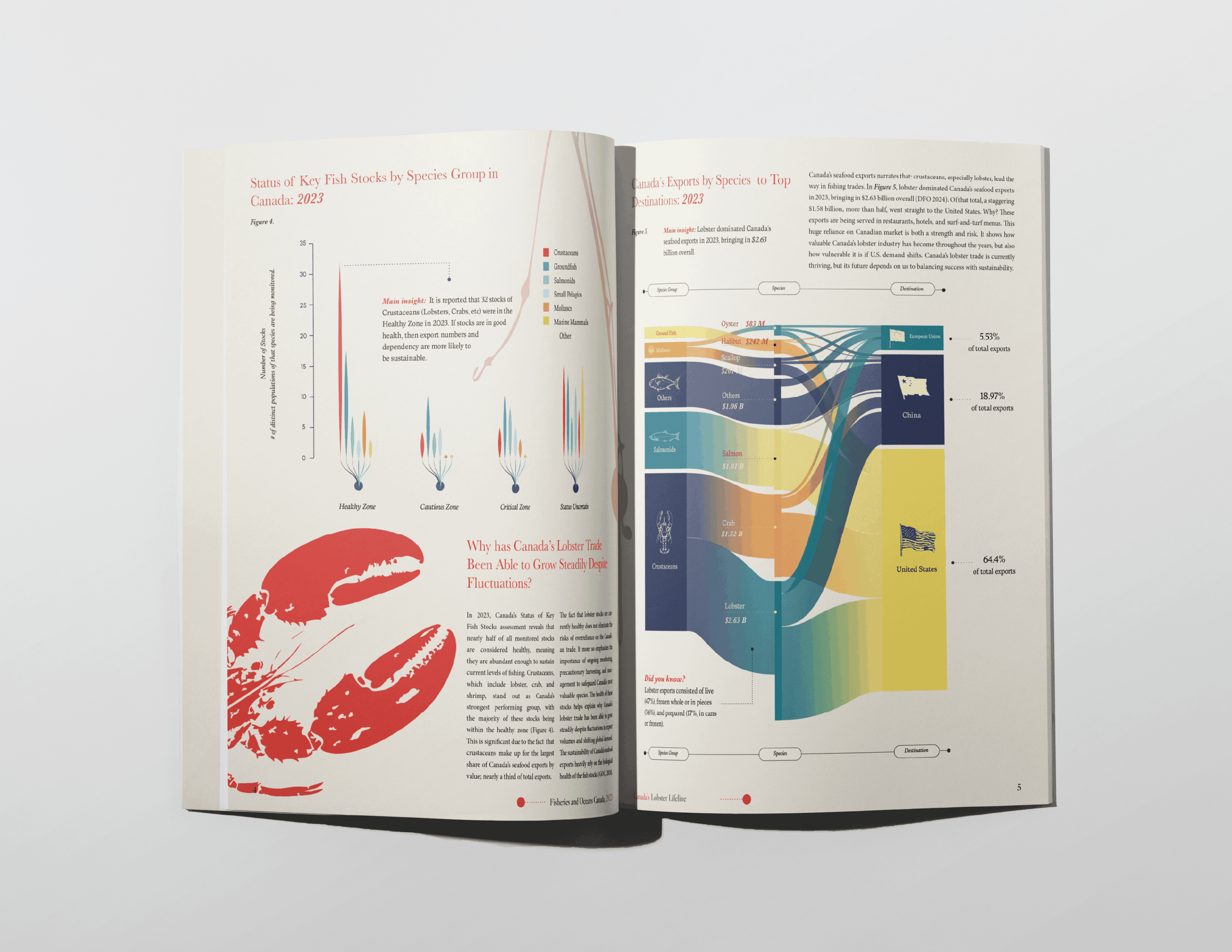
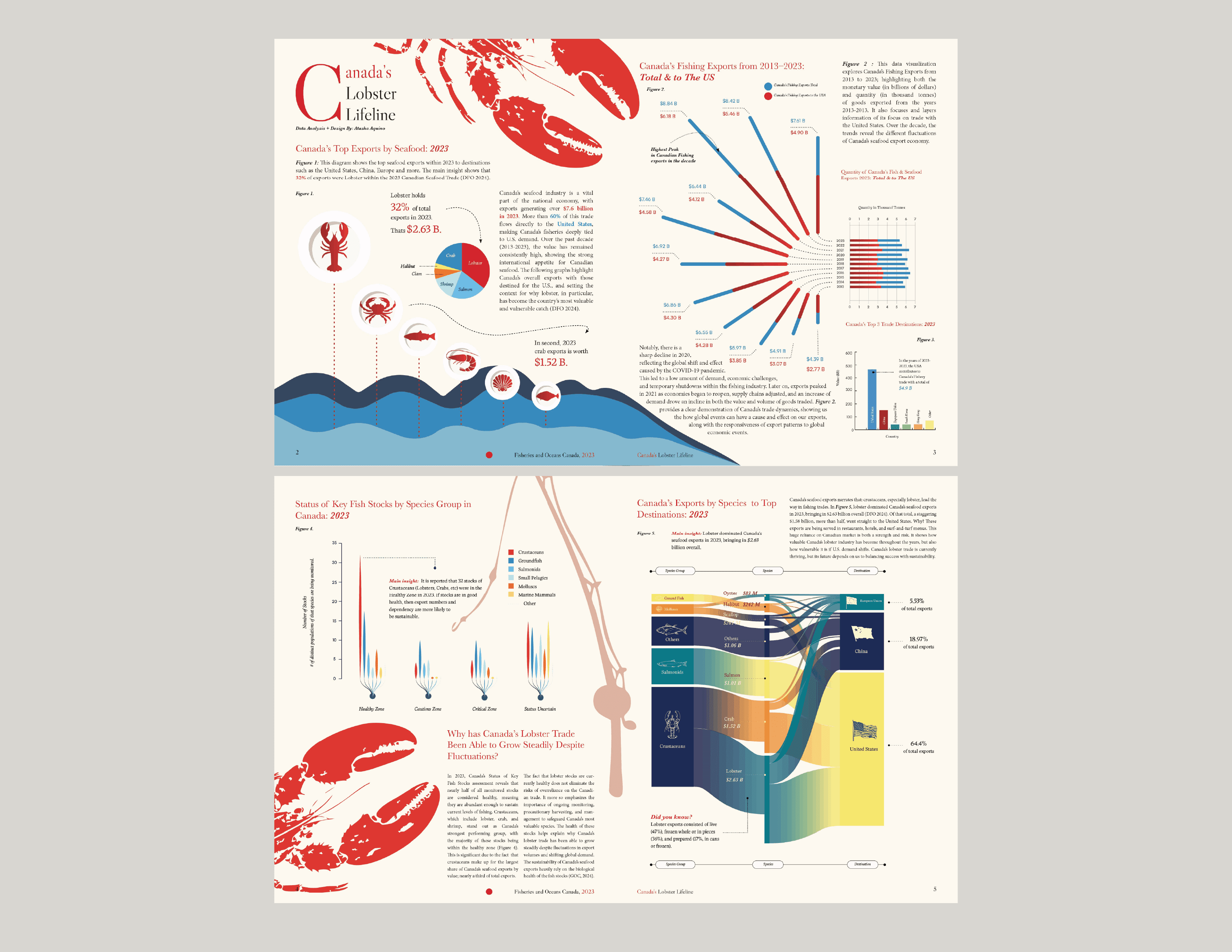
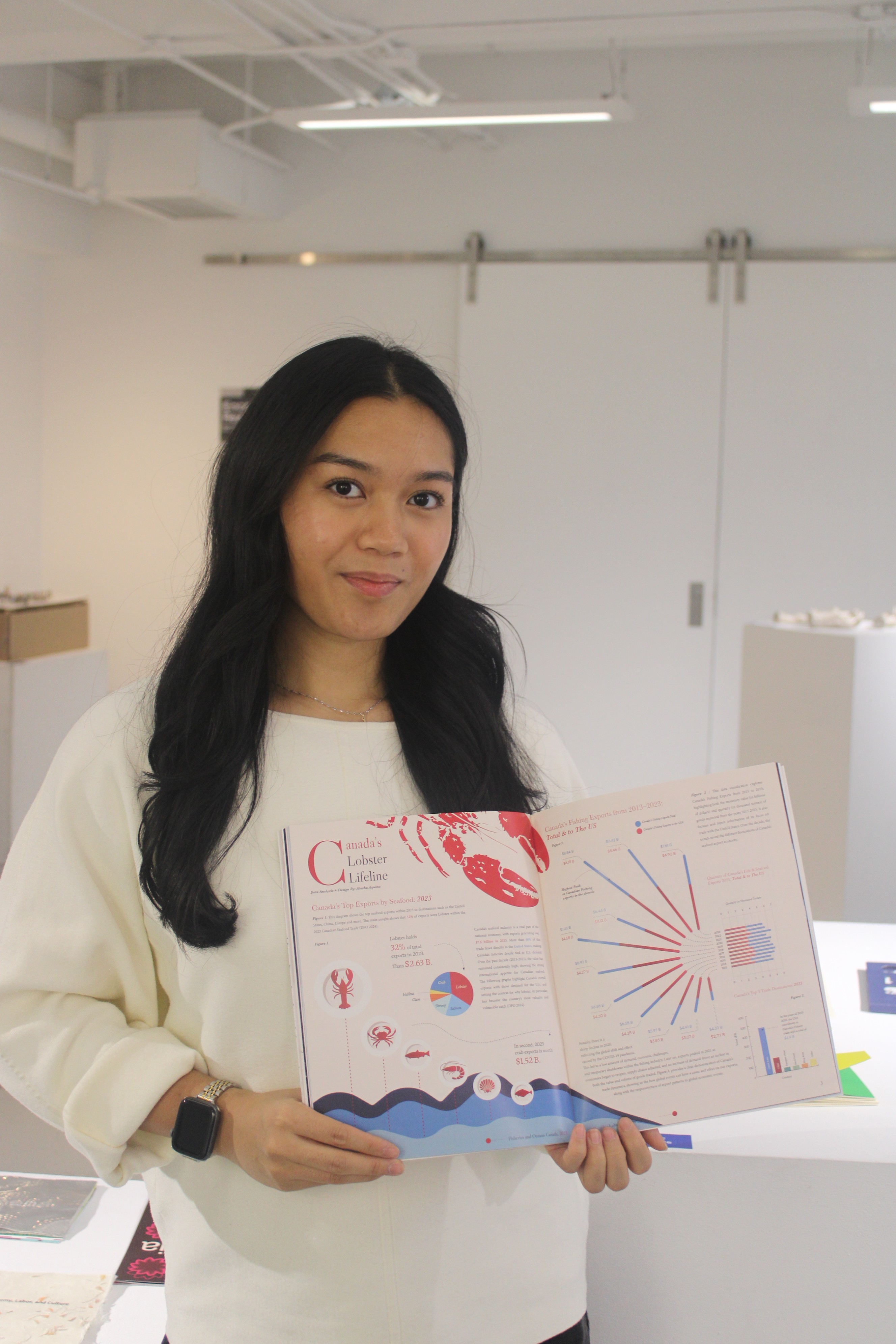
The intended audience for this project, Canada’s Lobster Lifeline, is for anyone who doesn't typically engage with data-heavy infographics. The design itself caters to young adults, students, and everyday consumers who interact with seafood through dining, rather than industry awareness.
The spreads were specifically designed to spread awareness and give individuals an insight of how deeply connected their choices are to Canada’s fishing industry and ocean ecosystems are. To connect with this audience, the data was simplified into visual and easy to the eye spreads; making the work along with the information approachable without actually losing its depth.
The main objective of Canada’s Lobster Lifeline was to communicate the scalability of Canada’s lobster industry. Ultimately revealing how reliant Canada is on the U.S. market when it comes to our fish. I wanted to frame this relationship with a broader environmental and economic context. Since this topic is underrepresented, the goal was to educate those who aren't familiar with this topic without overwhelming them with complex infographics.
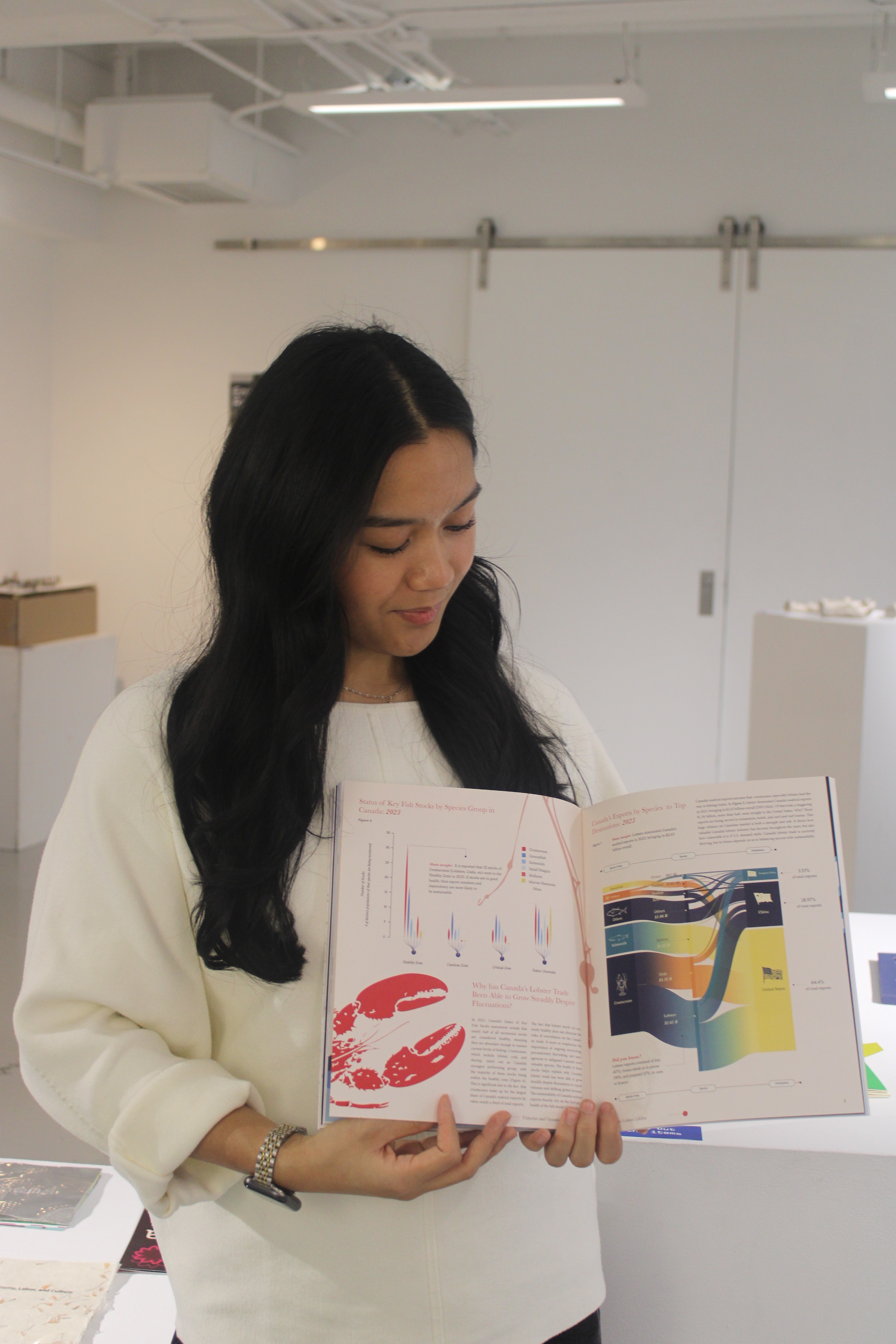
In order to achieve this goal, I used a series of layered data visualizations across 2 magazine spreads. Each and every visualization was designed to serve a specific role: ranking exports by species, comparing long-term trends in value and quantity, highlighting key trade destinations, and mapping the flow of seafood. Having this design layout hierarchy made it easier for the viewer to move from easy/simple comparisons to more complex infographics.
Type of Design Practice: Data Visualization, Informational Design, Editorial Design
Role: All Roles (Independent Project)
Main Software(s): Adobe Illustrator, Adobe Photoshop, Adobe Indesign, Flourish